
What Actually Affects Your Home’s Market Value
Many homeowners assume their home’s value is based on what they paid for it, what they need to make, or what a neighbor’s house sold for. In reality, market value is determined by a combination of factors that are often misunderstood.
Understanding what actually affects value can help you price more realistically and avoid surprises during the selling process.
Location Matters More Than Almost Anything
Location is one of the strongest drivers of value, but it goes beyond city names.
Buyers consider:
-
Neighborhood appeal
-
School districts
-
Proximity to amenities
-
Traffic patterns
-
Overall demand in that specific area
Two homes with similar layouts can have very different values simply because of where they are located.
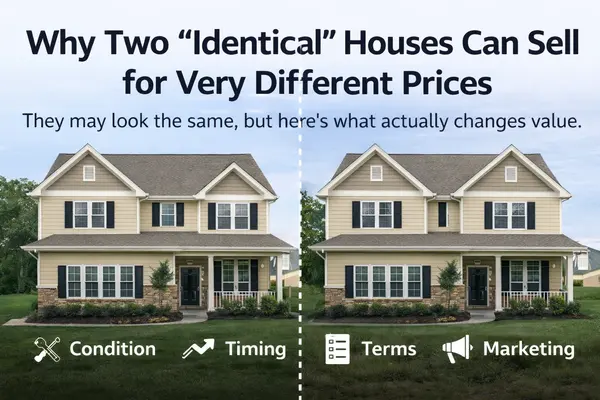
Condition Plays a Major Role
Condition directly impacts how buyers perceive value. This does not always mean cosmetic upgrades, but rather how well the home has been maintained.
Buyers pay close attention to:
-
Roof and HVAC age
-
Structural integrity
-
Signs of water damage
-
Deferred maintenance
-
Overall functionality
Homes that show signs of neglect often face stronger negotiation, even if the issues are not major.
Layout and Functionality Matter More Than Size Alone
Square footage is important, but how the space functions matters just as much.
Buyers look for:
-
Practical layouts
-
Adequate bedroom and bathroom count
-
Storage and usable space
-
Flow between rooms
A well laid out smaller home can outperform a larger home with awkward design.
Recent Comparable Sales Set the Baseline
Market value is anchored to recent comparable sales, not asking prices.
Comparable sales are homes that are:
-
Similar in size and layout
-
Located nearby
-
Sold recently
-
In similar condition
Online estimates can be helpful for general reference, but they often fail to account for condition, layout, and local demand.
Market Conditions Influence Buyer Behavior
Supply and demand play a major role in value.
Factors that affect buyer behavior include:
-
Interest rates
-
Inventory levels
-
Seasonal trends
-
Buyer confidence
In some markets, buyers compete aggressively. In others, they negotiate harder. Market value adjusts accordingly.
Overpricing Can Hurt Value More Than Underpricing
Many sellers believe testing a higher price is low risk. In reality, overpricing often leads to:
-
Longer days on market
-
Reduced buyer interest
-
Stronger negotiation later
-
Lower final sale price
Correct pricing from the start usually produces better results than chasing the market downward.
Repairs and Updates Have Diminishing Returns
Not all repairs increase value equally.
Some improvements help marketability but do not always return their full cost. Others may not be necessary at all, depending on the buyer pool and market conditions.
This is why some homeowners choose to list as is or explore other selling options instead of investing heavily upfront.
Final Thoughts
Market value is not determined by a single factor. It is the result of location, condition, layout, comparable sales, and market dynamics working together.
Understanding these factors helps sellers set realistic expectations and make informed decisions about pricing, preparation, and timing.
A thoughtful approach to value often leads to a smoother sale and a stronger outcome.
Categories
Recent Posts







GET MORE INFORMATION