
What Sellers Often Overestimate About Their Home’s Value

Many sellers have a number in mind before they ever talk to an agent or review the market. Sometimes that number is realistic. Other times, it is based on assumptions that do not hold up once buyers start weighing the property.
Understanding what sellers commonly overestimate about all value can help prevent pricing mistakes, reduce frustration, and lead to a smoother sale.
Emotional Value Does Not Equal Market Value
Homeowners often attach emotional value to their home based on memories, effort, or time spent maintaining the property.
Buyers do not see:
-
Years of ownership
-
Personal upgrades made for comfort
-
Sentimental attachment
-
What the home means to you personally
Buyers evaluate value based on condition, location, and comparable sales, not emotional investment.
Online Estimates Are Often Misleading
Automated valuation tools can provide a rough range, but they rarely tell the full story.
Online estimates often fail to account for:
-
Deferred maintenance
-
Layout and functionality
-
Interior condition
-
Recent upgrades or lack thereof
-
Micro location factors
These tools are starting points, not pricing strategies.
Cost Does Not Equal Return
Many sellers assume that because they spent money on improvements, that cost is fully reflected in value.
In reality:
-
Some upgrades help marketability more than price
-
Many improvements have diminishing returns
-
Buyers may not value finishes they did not choose
Just because a project was expensive does not mean it increases value dollar for dollar. In some cases, sellers choose selling as is rather than investing more money into upgrades that may not fully return their cost.
Listing High Can Hurt Final Value
Pricing above market value often leads to unintended consequences.
Overpriced homes tend to:
-
Sit longer on the market
-
Receive fewer showings
-
Signal issues to buyers
-
Lead to stronger negotiation later
Homes priced correctly from the start often sell faster and with fewer concessions.
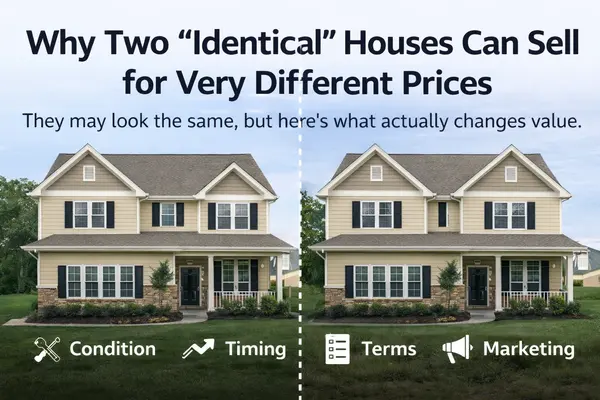
Condition and Competition Matter More Than Sellers Expect
Value is always relative to what else buyers can choose.
Even a well maintained home can struggle if:
-
Competing homes are more updated
-
Inventory is high
-
Buyer demand is soft
-
Financing conditions are tight
Market value shifts based on what buyers are seeing at the same time.
Understanding Value Leads to Better Decisions
When sellers understand how value is actually determined, they can make clearer decisions about:
-
Pricing strategy
-
Whether to make repairs
-
How flexible to be in negotiations
-
Which selling option fits best
This understanding often reduces stress and leads to more predictable outcomes.
Final Thoughts
Overestimating value is common, but it is also avoidable.
Clear expectations, realistic pricing, and an understanding of how buyers think can make the selling process smoother and more successful.
Value is not just about what a home is worth to the seller. It is about what buyers are willing to pay in the current market.
Categories
Recent Posts






GET MORE INFORMATION